I have a son. Elano turns sixteen this November. And for a long time, without ever really questioning it, I loved him the way most parents love their children — fiercely, specifically, only him.
I used to catch myself thinking: what can I buy him that I never got as a kid? What can I give him to eat that I never got to eat? What can I make sure he never has to go without? It felt like love. It felt like good parenting. And in a way it was — but I've started to notice something underneath it that isn't quite as innocent as it looks.
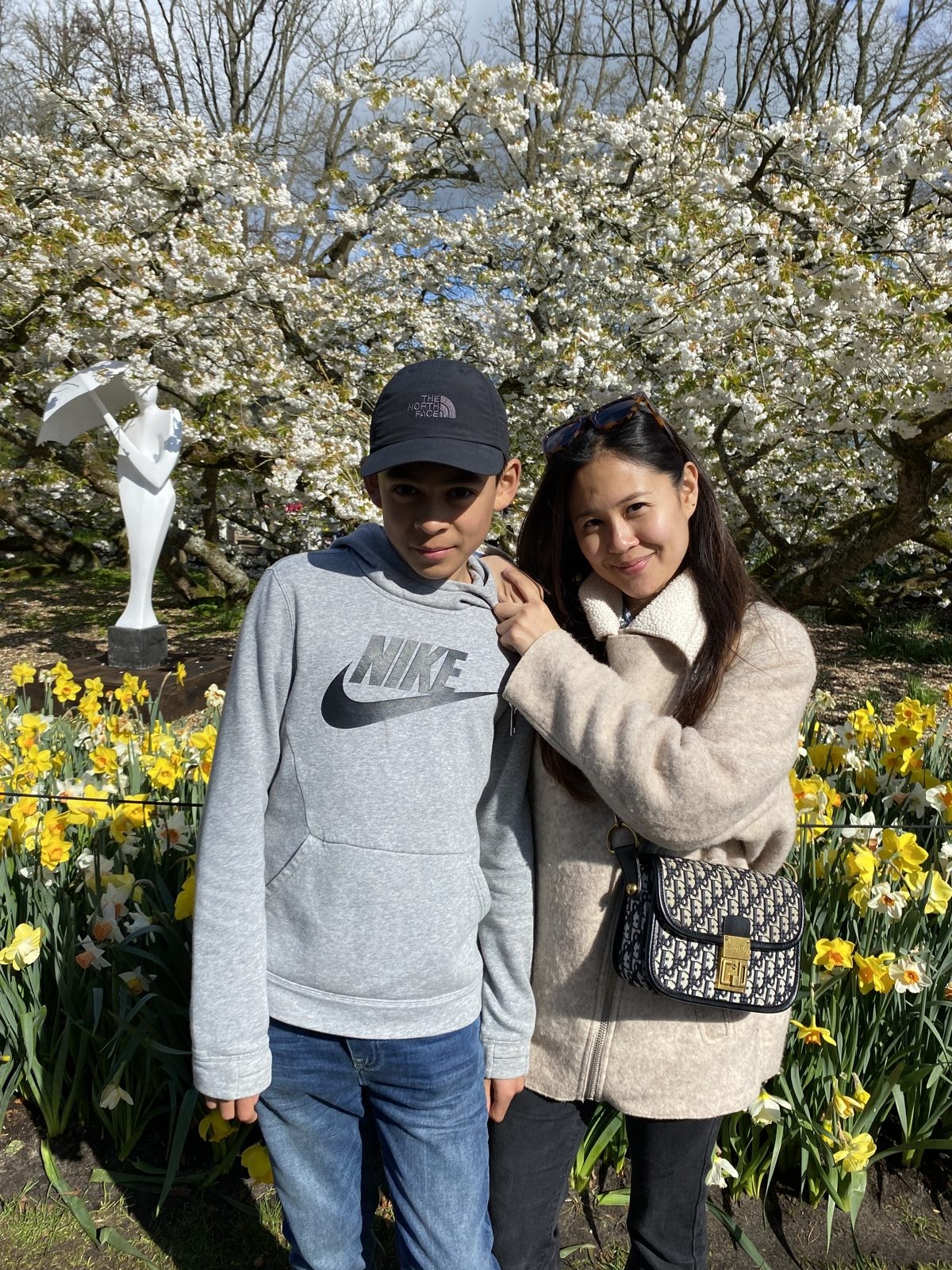
Elano and me, spring
The quiet selfishness of "my" child
Parental love, the way most of us practice it, is one of the most quietly egoistic things a human being does — and I say that as someone who has done it, still does it, and isn't finished doing it.
Think about what we actually mean when we say we love our children. We mean we want this child, specifically, to thrive. We want my son to have opportunities. We want my daughter to be safe, fed, educated, ahead. And the moment we frame it that way, we've already drawn a circle — and everyone outside that circle becomes, quietly, someone else's problem.
But here's the thing that stopped me: every child, everywhere, is somebody's Elano. Every child a parent is fighting for the future of is exactly as precious, exactly as deserving, as the one who used to sleep down the hall in my house. Nothing about my son makes his wellbeing matter more than a child born the same week in a village with no clean water, or a refugee camp, or a war zone. The only difference is proximity. He happens to be mine. That's not a moral fact. That's just geography and biology dressed up as one.
If we're honest, "I just want what's best for my child" is one of the most universally accepted forms of ego there is — because it's disguised as love, so nobody questions it. Nobody calls a parent selfish for wanting their kid to succeed. But turn the lens slightly: if every parent on earth is only fighting for their own child, and nobody is fighting for the children who aren't theirs, then we've built a world where love has borders. And a world where love has borders is exactly the kind of world we're living in.
What we're actually teaching them
Here's the part that troubles me most, watching Elano grow up: it's not just that we practice this ego — we hand it to our children, gift-wrapped, before they're even old enough to question it.
Think about what we actually give them, and why. New shoes when the old ones still work, because someone in his class had newer ones. A phone, a game, a brand, because everyone else has it and we don't want him to feel behind. We tell ourselves this is generosity. It isn't, not really. It's status, translated into objects a child can hold. We are teaching our children, from a very young age, that happiness is something you acquire, something you're owed, something that puts you slightly above the kid next to you — instead of teaching them that happiness was never something you needed to buy in the first place.
And none of it is even real. A new pair of shoes isn't food. A phone isn't connection. None of it is what a human being actually needs to be okay — and yet we hand it to our children as if it is, because it's easier than sitting with the harder question: why do I feel the need to give my child more than I had, more than the child next door has, more than enough? Where is that feeling actually coming from?
It's coming from the same place all ego comes from. We do it to ourselves first — the bigger house, the next promotion, the achievement stacked on achievement, the need to feel like we're on top of something, anything. And then, without ever deciding to, we teach it to the people we love most in the world, because it's the only language of love we were ever shown ourselves.
"I could feel like a good mother without having to actually be one."
Learning this the hard way
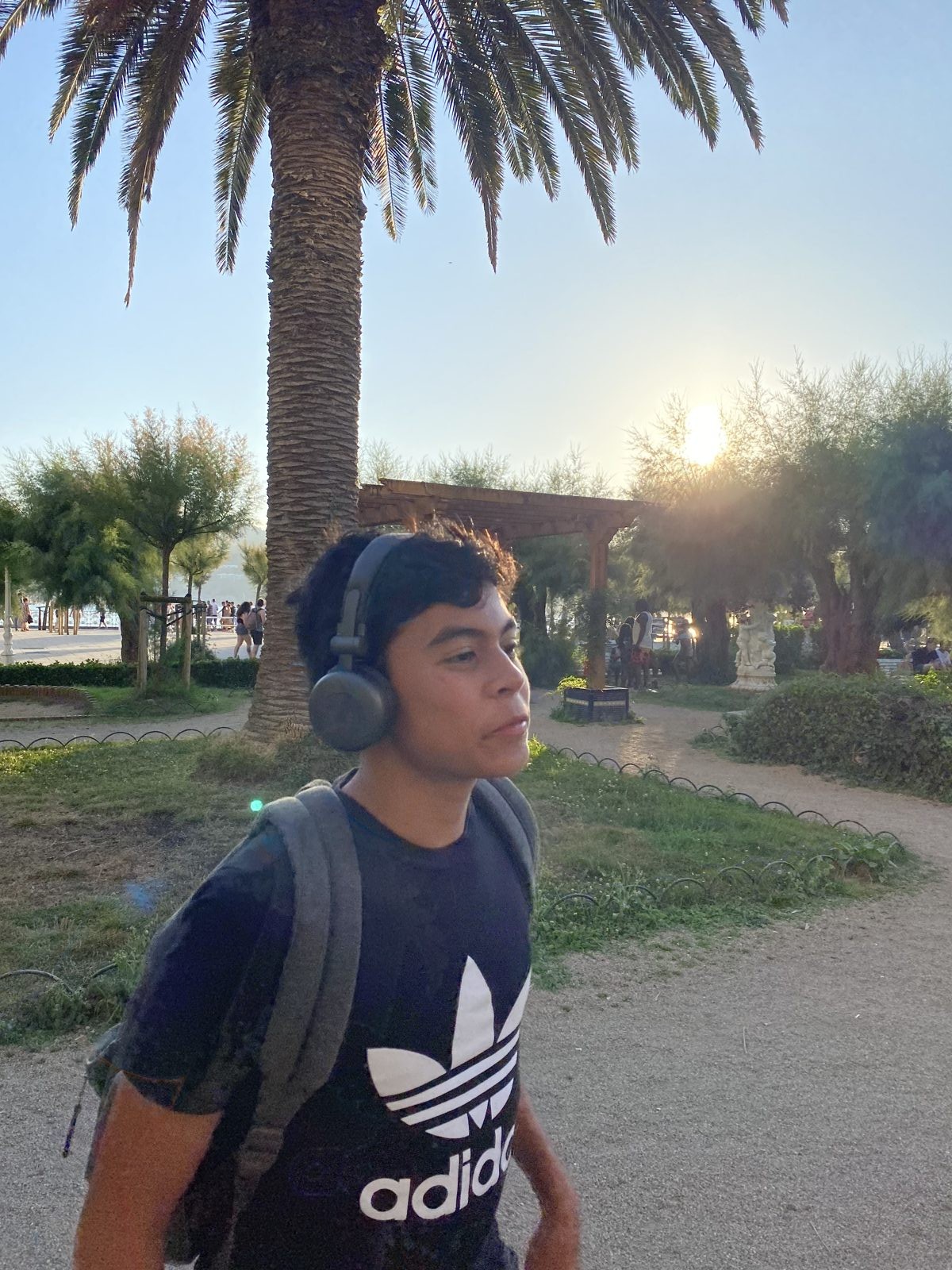
Elano, finding his own way now
It's one thing to write about letting go of the ego in parenting. It's another to actually be handed the chance to practice it, and have no choice but to take it.
A year and a half ago, Elano moved in with his father. We talked it through, and I agreed to it — not because it was easy, but because somewhere in that conversation I had to actually confront the thing I'd been writing about in theory: he isn't mine. He never was. He is his own person, moving through his own life, and my job was never to hold on as tightly as I could. It was to raise someone capable of walking away from me and being okay.
That's a strange kind of love to practice — the kind that lets go on purpose. And it's forced me to look honestly at the arcade trips, the little treats, the things I used to reach for. If I'm truly honest with myself, the arcade wasn't really about Elano having fun. It was about me. Twenty minutes, a pocket full of coins, his eyes lighting up at the machines — and just like that, I could feel like a good mother without having to actually be one. I was buying his love in twenty-minute increments, and calling it quality time. It was never quality. It was quick. It was easy. And it let me skip the harder, slower work of actually sitting with him, listening to him, being present in a way that costs nothing but attention and can't be swiped on a card. Going to the arcade isn't on my menu anymore, not because I've become strict, but because I finally see what it actually was: a transaction dressed up as closeness, and a shortcut I took because presence is harder than a coin machine.
His father is raising him with a lot of freedom now, more screens, more independence, a different rhythm than the one I would have chosen. And I don't get to control that anymore, and honestly, I'm not sure I should. What I can do is hope — hope that some of what I tried to plant in him actually took root. Not the things, never the things. Just the first and most important thing I ever tried to teach him: be a good person. Be kind to others, all others, not just the ones who are easy to be kind to.
Eighteen months of distance is a long time in a mother's life. It's also been enough time to see clearly what love was, underneath all the noise I used to mistake for it.
A different question
I've started asking myself a different question, and it's uncomfortable in a good way. Instead of how can I make my son's life even better, I try to also ask: how can I make more children's lives better, the way I want his to be better? Not instead of loving him fiercely — I don't think that's possible, or even right, to switch off. But alongside it. Widening the circle instead of just guarding it.
Because if every parent asked that second question even a little — if love for our own children came with even a small, standing commitment to children who will never call us mother or father — the whole shape of the world would shift. Not through some grand gesture. Just through millions of parents quietly deciding that a child's worth doesn't start or stop at their own front door.
All children are our children
Every child is somebody's whole world, the way Elano is mine, wherever he's sleeping tonight. That was never in question. What I'm questioning is why we stop there — why the love ends exactly where the bloodline does, as if wellbeing were a resource too scarce to share, when the truth is the opposite. Love isn't scarce. We just built a world that trained us to hoard it like it was.
I don't have this figured out. I still feel that old pull sometimes, the urge to give more, to fix things with something bought instead of something given of myself. The ego doesn't disappear just because you can see it clearly, or because life forces your hand — it's patient, and it comes back the moment you stop watching. But I'd rather see it and fail at loving wider than not see it at all.
All children should be loved. Not just yours. Not just mine. Ours.